

If you love Korean food, you probably know kimchi. It is spicy, tangy, and full of flavor. Many people think making kimchi is difficult and takes days. But you can make easy cabbage kimchi at home with simple steps and basic ingredients. You do not need to be an expert or have special tools. This guide will show you how to make tasty kimchi, even if you are new to cooking. You will learn about the best ingredients, step-by-step instructions, practical tips, common mistakes, and how to adjust the recipe for your taste. By the end, you will have homemade kimchi that is fresh, crunchy, and ready to enjoy.
What Is Cabbage Kimchi?
Cabbage kimchi is a traditional Korean dish made from fermented cabbage and spicy seasonings. The most popular type uses napa cabbage, but you can also use regular green cabbage if you prefer. Kimchi is a staple in Korean meals, served as a side dish or mixed into rice, soups, and noodles. The fermentation process gives kimchi its unique sour taste and makes it healthy, rich in probiotics, vitamins, and fiber.
Kimchi is known for its bold flavors: spicy, salty, sour, and a little sweet. The dish has been enjoyed for centuries, and today it is popular around the world. You can find kimchi in supermarkets, but homemade kimchi tastes fresher and lets you control the spice and salt levels.
Ingredients For Easy Cabbage Kimchi
To make easy kimchi, you need only a few basic ingredients. You can find most of them in local stores or Asian markets. Here is what you need for a small batch (about 1.5 kg, serves 6-8 people):
- Napa cabbage: 1 large head (about 1.2 kg)
- Salt: 1/4 cup (coarse sea salt works best)
- Water: Enough to soak the cabbage
- Carrot: 1 medium (optional, for color and crunch)
- Green onion: 3 stalks
- Garlic: 5 cloves
- Ginger: 1 thumb-sized piece
- Korean red pepper flakes (gochugaru): 3 tablespoons (adjust for spice)
- Fish sauce: 3 tablespoons (or soy sauce for vegetarian)
- Sugar: 2 teaspoons
- Radish: 1 small (optional, for extra crunch)
- Rice flour: 1 tablespoon (optional, for thickening paste)
These ingredients create classic kimchi flavor. Some recipes add apple or pear for sweetness, but for easy kimchi, you can skip fruit.

Step-by-step Guide To Making Cabbage Kimchi
Making kimchi is simple if you follow clear steps. Here is how to do it:
1. Prepare And Salt The Cabbage
Start by cutting the cabbage into quarters. Remove the thick stem, then chop each quarter into bite-size pieces. Place the cabbage in a large bowl.
Sprinkle the salt evenly over the cabbage, making sure all pieces are coated. Add enough water to cover the cabbage. Mix and let it soak for 2 hours. Every 30 minutes, toss the cabbage to help the salt reach all parts.
The salt pulls water from the cabbage, making it soft and ready for seasoning. After 2 hours, rinse the cabbage 2-3 times in cold water to remove extra salt. Drain well.
2. Make The Kimchi Paste
While the cabbage is soaking, make the seasoning paste.
- Chop the carrot, radish, and green onion into thin strips.
- Peel and mince the garlic and ginger.
- In a bowl, mix the minced garlic, ginger, red pepper flakes, fish sauce, sugar, and rice flour (if using).
- Add the chopped vegetables and mix well.
The paste should be thick and sticky. If it is too dry, add a splash of water.
3. Combine Cabbage And Paste
Put on kitchen gloves to protect your hands from the spice. Place the drained cabbage in a large bowl.
Add the paste and mix everything by hand. Rub the paste onto each piece of cabbage. Make sure all cabbage is coated well with the seasoning.
4. Pack And Ferment
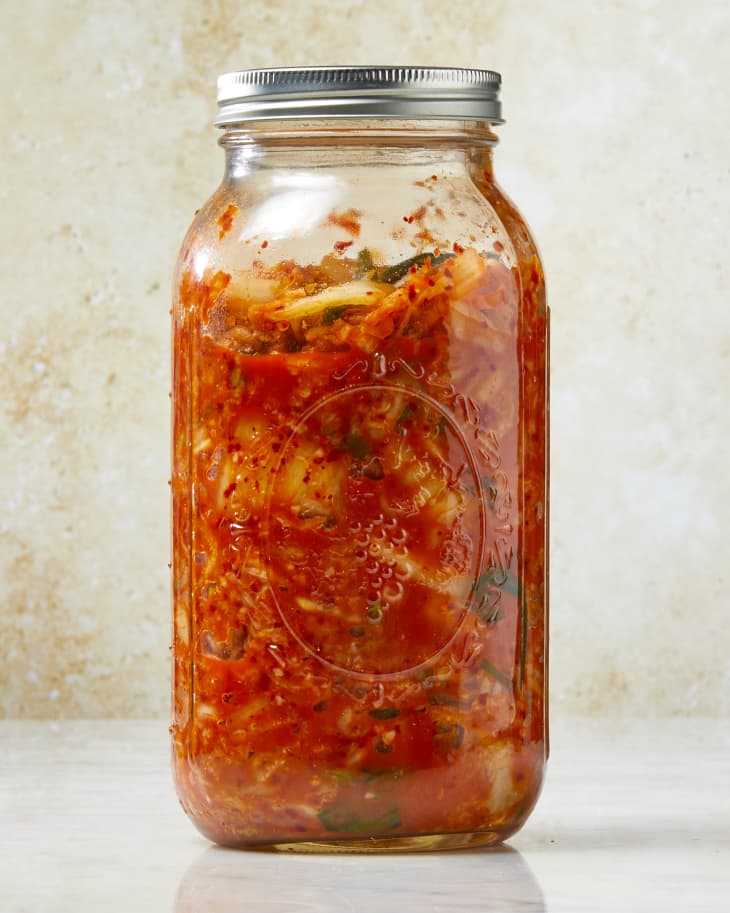
Transfer the coated cabbage into a clean glass jar or plastic container. Press down to remove air pockets. Leave some space at the top for the kimchi to expand.
Seal the jar loosely. Let the kimchi sit at room temperature for 1-2 days to start fermentation. After 24-48 hours, taste the kimchi. If it is sour and tangy, move it to the fridge. If not, leave it for another day.
Kimchi will continue to ferment in the fridge, becoming more sour over time. You can eat it fresh or wait for a stronger flavor.
5. Serve And Enjoy
Kimchi is ready to eat once it tastes sour and flavorful. Serve it cold as a side dish, with rice, noodles, or in sandwiches. Homemade kimchi stays good for up to 3 weeks in the fridge.
Practical Tips For Better Kimchi
Even easy kimchi can be improved with a few smart tricks:
- Use coarse salt for better texture. Fine salt makes cabbage mushy.
- Make sure jars and tools are very clean to prevent mold.
- If you want less spicy kimchi, use less gochugaru or mix in sweet paprika.
- For vegetarian kimchi, use soy sauce instead of fish sauce.
- Add a slice of apple or pear for natural sweetness, but do not overdo it.
- If you live in a warm place, ferment kimchi for only 1 day. In cold places, 2-3 days may be needed.
- Always taste kimchi before moving it to the fridge. Adjust salt or sugar if needed.
Many beginners miss the importance of rinsing the cabbage well after salting. Too much salt left can make kimchi overly salty. Also, do not pack cabbage too tightly in the jar; it needs space to ferment.
Common Mistakes And How To Fix Them
Making kimchi is simple, but mistakes can happen. Here are some common problems and solutions:
- Kimchi is too salty: Rinse cabbage more before mixing with paste. Add a little sugar to balance.
- Kimchi is bland: Increase the amount of fish sauce or salt, or ferment longer.
- Kimchi is too spicy: Use less gochugaru next time, or mix in shredded carrot for sweetness.
- Kimchi smells bad: Clean jars and hands well. Use only fresh ingredients.
- Kimchi is mushy: Use coarse salt and do not oversoak cabbage.
- Mold appears: Remove moldy parts and check if the rest is safe. Always use clean jars.
One insight beginners miss is that kimchi will taste different each time depending on temperature, salt, and even water used. Keeping a food diary helps you improve your recipe over time.
Comparison: Homemade Vs Store-bought Kimchi
Many people wonder if homemade kimchi is better than store-bought. Here is a quick comparison:
| Feature | Homemade Kimchi | Store-Bought Kimchi |
|---|---|---|
| Flavor | Customizable, fresh | Consistent, but often less fresh |
| Ingredients | Natural, no additives | May contain preservatives |
| Cost | Lower, especially for large batches | Higher for small amounts |
| Fermentation | Can control length | Usually pre-fermented |
| Nutrition | Rich in probiotics | Varies, sometimes less live bacteria |
Homemade kimchi lets you change spice, salt, and sweetness. Store kimchi is easier, but you cannot adjust the taste.
How To Adjust Kimchi For Your Taste
Kimchi is flexible. You can adjust the recipe for your style:
- Less spicy: Cut the gochugaru in half, or use mild chili powder.
- More sour: Ferment longer, up to 3 days at room temperature.
- Sweeter: Add extra sugar or apple.
- Crunchier: Use less water in soaking, or add extra radish.
Some people like kimchi very strong and sour, while others prefer it mild and fresh. Try different versions to find your favorite.
Storage And Shelf Life
Kimchi lasts a long time because of fermentation. Here is how to keep it fresh:
- Store kimchi in a glass jar with a tight lid.
- Keep in the fridge after fermentation. It stays good for up to 3 weeks.
- Always use clean utensils to take kimchi from the jar.
- If kimchi turns brown or smells bad, it is time to throw it away.
A common mistake is to leave kimchi out too long after opening. Always return it to the fridge quickly.
Nutrition Facts And Health Benefits
Kimchi is not just tasty—it is healthy. Here is what you get in a typical serving (100 grams):
| Nutrient | Amount |
|---|---|
| Calories | 30 kcal |
| Carbohydrates | 6 grams |
| Protein | 1 gram |
| Fiber | 2 grams |
| Vitamin C | 20 mg |
| Probiotics | High |
Kimchi is low in calories, high in fiber, and rich in vitamins. The fermentation process adds probiotics, which are good for digestion and immune health. Some studies show kimchi may help lower cholesterol and support gut health.
For more information on kimchi health benefits, check Wikipedia.
Serving Suggestions
You can eat kimchi in many ways:
- As a side dish with rice or noodles
- Mixed into fried rice (kimchi bokkeumbap)
- Added to soups and stews
- In sandwiches or wraps for extra flavor
- On pizza or tacos for a fusion twist
Try kimchi with grilled meats or eggs for a tasty meal. If you have leftover kimchi, use it in pancakes (kimchi jeon) or dumplings.

Frequently Asked Questions
How Long Does Homemade Kimchi Take To Ferment?
Homemade kimchi usually needs 1-2 days at room temperature to ferment. In colder places, it may take up to 3 days. After fermentation, store it in the fridge for best taste.
Can I Make Kimchi Without Fish Sauce?
Yes, you can use soy sauce instead of fish sauce for vegetarian kimchi. The taste will be slightly different, but still good.
What Type Of Cabbage Is Best For Kimchi?
Napa cabbage is traditional and gives the best texture. You can use green cabbage, but it will be firmer and less juicy.
Is Kimchi Safe To Eat For Everyone?
Most people can enjoy kimchi, but it is spicy and salty. If you have sensitive stomach, high blood pressure, or allergy to seafood, choose milder and low-salt versions.
How Do I Know If Kimchi Has Gone Bad?
Kimchi is safe for weeks, but if it turns brown, smells rotten, or grows mold, it should be thrown away. Proper storage keeps kimchi fresh.
Making easy cabbage kimchi at home is rewarding and fun. You can adjust flavors, learn new skills, and enjoy a healthy dish every day. Try this simple recipe and see how homemade kimchi changes your meals. If you follow the tips and avoid common mistakes, your kimchi will be tasty and safe.
Enjoy your homemade kimchi and share it with friends and family!

