
When your oven refuses to heat up, it can throw a wrench into your daily routine. Picture this: you’ve prepped your ingredients, set the table, and your guests are moments away from arriving.
But your oven? It’s not cooperating. You might feel a mix of frustration and urgency, and you’re not alone. Many of us face this issue, and understanding why it happens can be a game-changer. We’re diving into the common reasons your oven might not heat up.
We’ll explore simple solutions that can save you time, money, and stress. Imagine the relief of diagnosing the problem on your own and getting back to your cooking in no time. Whether it’s a minor glitch or something more complex, knowing what to look for can make all the difference. So, if you’re ready to take control of your kitchen once again, keep reading. Your culinary peace of mind awaits!

Common Causes
Power supply problemscan stop the oven from heating. Check if the oven is plugged in. Look for tripped circuit breakers. These can stop power flow. Make sure the outlet is working. Test with another device. Power issues are often simple to fix.
Heating elements can wear out. This stops the oven from warming. Examine the elements for damage. Broken elements need replacing. They are vital for heat. Without them, no cooking happens.
The thermostat controls oven temperature. A defective thermostatleads to wrong heat levels. Test with an oven thermometer. If the temperature is off, replace the thermostat. It is crucial for proper heat.
The igniter helps start the oven. A broken igniter means no heat. Check if it glows. If not, it may need replacing. Igniters are keyfor gas ovens. Without them, the oven will stay cold.
The control board sends signals to heat the oven. If it malfunctions, the oven won’t heat. Look for error codes. These can show issues. Fixing the board may require a technician. It’s an important part of the oven.
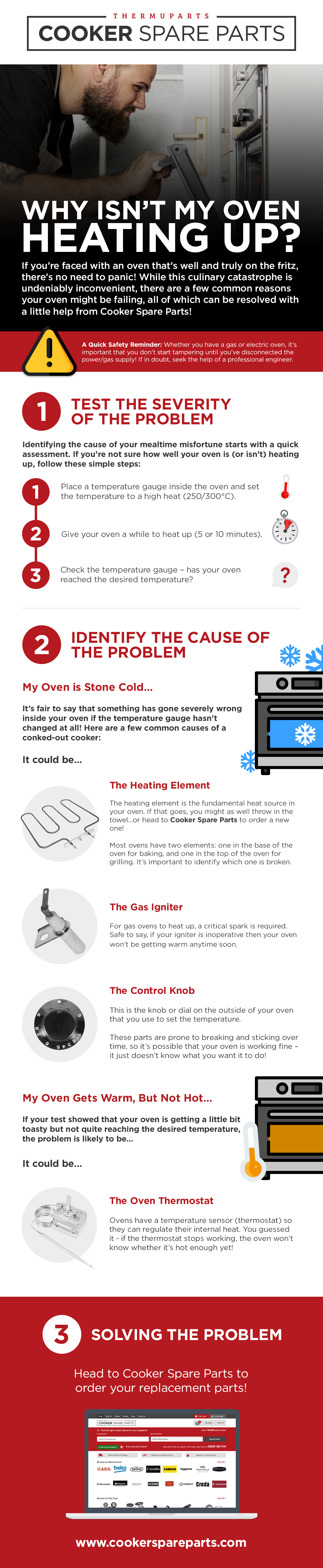
Diagnosing The Problem
Ensure the oven is plugged in properly. Check the power cord for any damage. Look at the circuit breaker in your home. It might be tripped or off. Reset it if needed. Make sure all wires are tight. Loose wires can cause trouble.
Look at the heating elements inside the oven. Do they appear damaged? If so, they might not work. Touch them gently to see if they are loose. A loose element will not heat well. Replace any broken elements.
The thermostat controls the oven’s heat. Test it with a multimeter. Make sure it shows the right numbers. If not, the thermostat may be broken. A faulty thermostat can’t keep the oven hot.
The igniter lights the oven’s burners. Check if it glows when turned on. If it does not glow, it may be faulty. A broken igniter won’t start the oven. Replacing it can fix the heat issue.
The control board sends signals to heat the oven. Inspect it for any burnt marks. If the board seems damaged, it may not work right. A broken board means no heat. Consider getting a new one if needed.
Simple Fixes
Oven not heating up? First, check your circuit breaker. Sometimes, it trips. Go to the breaker box and find the switch for your oven. Flip it off, then on. This can help reset the power. Electric ovens need steady power. Make sure the breaker is working right.
Heating elements can wear out. Broken elements mean no heat. Find the element inside your oven. Look for burn marks or breaks. These are signs of damage. If damaged, replace the element. This is a common fix for oven heat problems.
Oven temperature can be wrong. This needs calibration. Check your oven manual for steps. Adjusting the thermostat can help. Use an oven thermometer to test. This makes sure the temperature is right.
Gas ovens have igniters. Igniters light the gas flame. If dirty, they might not work. Clean the igniter with a brush. If still not working, replace the igniter. A clean igniter helps the oven heat up.
Sometimes the control board gets confused. This stops the oven from working. Find the power button or unplug the oven. Wait for a minute. Then plug it back in or turn it on. This reboot can fix the board.

When To Call A Professional
Electrical problems can be dangerous. Oven wiring is often complex. A professional knows these systems well. They can safely fix the problem. Never try to fix wiring yourself. It is not safe for beginners.
The oven does not heat up sometimes. It may be a persistent issue. If the problem does not go away, call an expert. They can check for hidden faults. This ensures your oven works well again.
Look for signs like burnt marks or strange noises. These can mean big problems. Extensive damage might need special tools to fix. A professional has the right tools and skills. This makes repair quick and safe.
Many ovens come with a warranty. A warranty helps cover repair costs. Check if your oven still has one. If yes, call the company for help. They can send a trained professional. This keeps your warranty active.
Preventive Measures
Regular maintenance can prevent an oven from not heating up. Clean heating elements and check connections. Routine inspections can identify worn parts early, ensuring efficient operation and avoiding inconvenience.
Regular Maintenance Tips
Check the oven monthlyfor any signs of wear. Look for loose parts or wires. Tighten them if needed. Keep a small toolkit handy. Replace any broken parts quickly. Regular checks can prevent big problems.
Proper Cleaning Techniques
Clean the oven after every use. Use a soft cloth and mild soap. Avoid harsh chemicals; they can damage parts. Remove food bits from the oven floor. Check the door seal for food particles. A clean oven works better and lasts longer.
Avoiding Overuse
Let the oven cool before using it again. Avoid using it for long hours continuously. This prevents overheating. Use other appliances for small tasks. This saves energy and keeps the oven healthy.
Monitoring For Early Signs Of Failure
Listen for strange noises. Smell for unusual odors. Check for uneven heating. These can be early failure signs. Report issues to a technician quickly. Early fixes cost less than major repairs.
Frequently Asked Questions
Why Is My Oven Not Heating Properly?
Your oven might not heat properly due to faulty heating elements or a malfunctioning thermostat. Check if the heating elements glow red when turned on. If not, they may need replacement. Also, ensure the thermostat is calibrated correctly. A professional inspection can help diagnose and fix the issue effectively.
How Do I Troubleshoot A Cold Oven?
Start by checking the power supply and ensuring the oven is plugged in. Inspect the heating elements for visible damage and ensure they are functioning. Verify the thermostat settings and calibration. If these steps don’t help, consult a technician for a detailed analysis and repair.
Can A Broken Thermostat Prevent Heating?
Yes, a broken thermostat can prevent your oven from heating. It regulates the temperature, and if malfunctioning, it may not signal the heating elements correctly. Check for calibration errors or physical damage. If unsure, consider professional evaluation to ensure accurate temperature control.
Are Heating Elements Commonly Replaced?
Heating elements are frequently replaced in ovens that fail to heat. Over time, they may burn out or become faulty, affecting performance. If your oven’s elements don’t glow when turned on, it might be time for replacement. Consult your oven’s manual for guidance or seek professional assistance.
Conclusion
Ovens can face various issues, but solutions are within reach. Check the thermostat first. It might be faulty. Examine heating elements for wear and tear. Replace if needed. Ensure the oven is plugged in securely. Sometimes, the power connection fails.
Inspect the control board for damage. It may need repair. Regular maintenance prevents most problems. Keep your oven clean and check it regularly. With these tips, your oven should heat properly again. Always consider seeking professional help if unsure. A well-functioning oven makes cooking enjoyable and hassle-free.

